Demna’s Gucci Debut: A House of Mirrors for the Modern Times
“Everything you could say about a human being, you can say about Gucci."
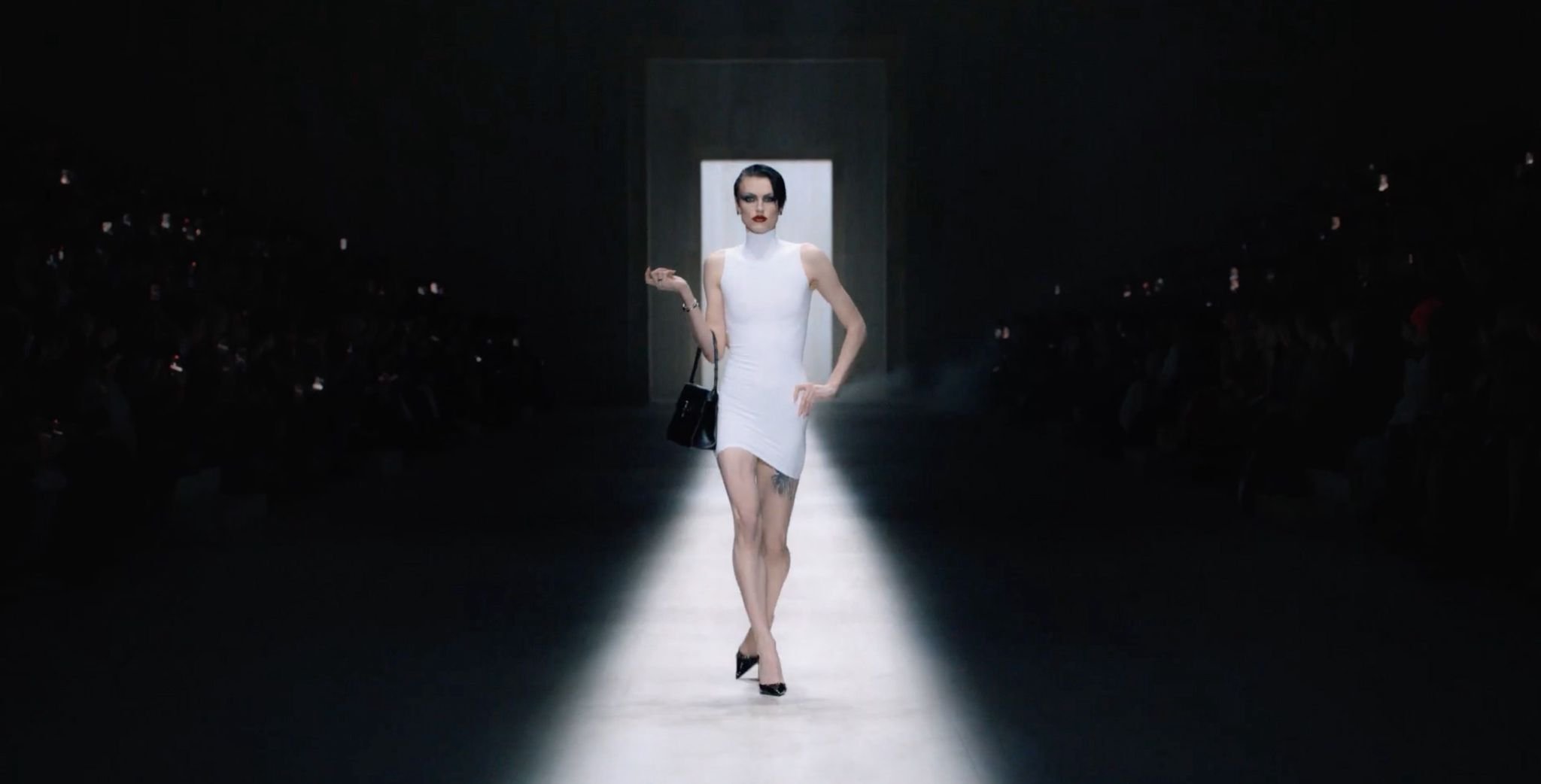
The collection opens with a seamless minidress in white hosiery fabric; a gesture to all the judging eyes: I come in peace.
All eyes were on the seemingly skimpy, seafoam-white turtleneck dress in hosiery fabric that opened Demna’s debut collection for Gucci; a metaphor for the blank slate with which the Georgia designer seems to have arrived at the Italian behemoth, as well as an interesting gesture to all the judging eyes: I come in peace.
Finally divorced from the ghost of Cristóbal Balenciaga, Demna’s creative power appears to be in full force: the collection, which toyed with ideas of collective taste and social expectations, was a sharp demonstration of his uncontested ability to tap into the moment and subversively maximize it.
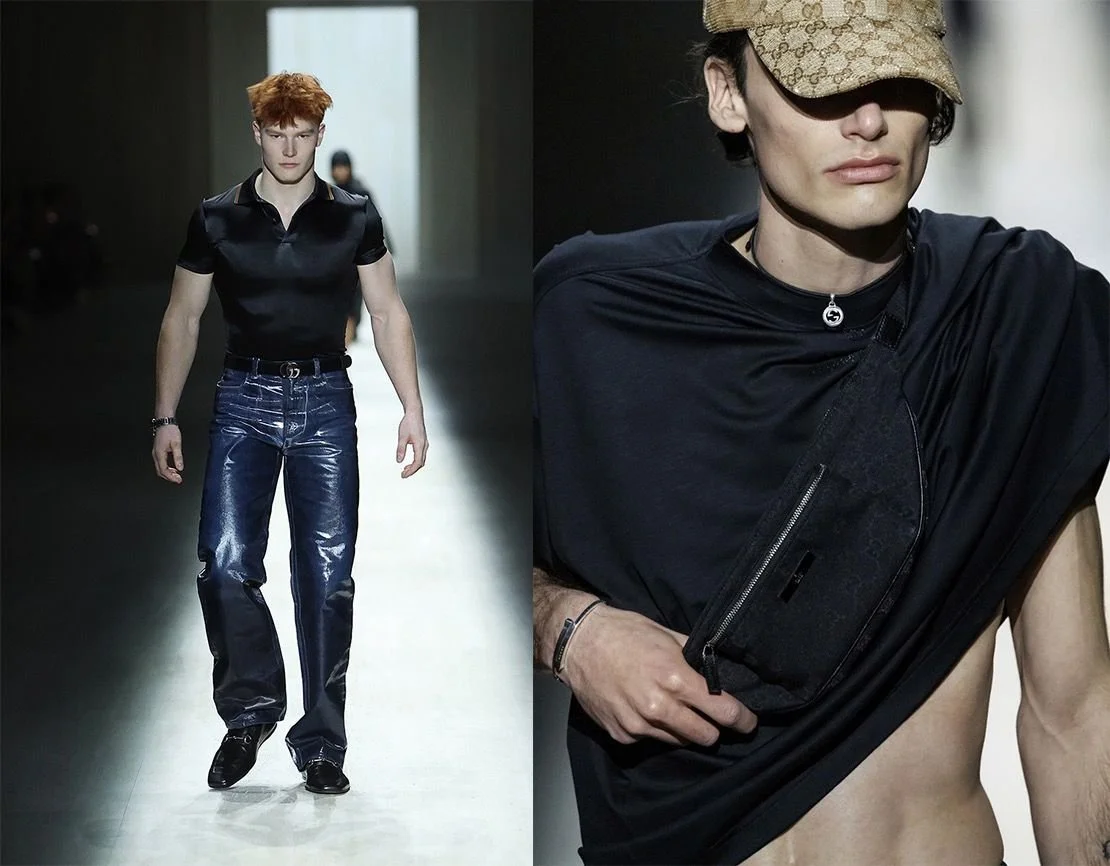
T-shirts with artfully placed muscle-enhancing padding, or casually worn as stoles in a seedy manner, seemed to question the institution of basic-wear as cornerstones of individuality or uniformity. (Right photo by Gaspar J. Ruiz Lindberg)
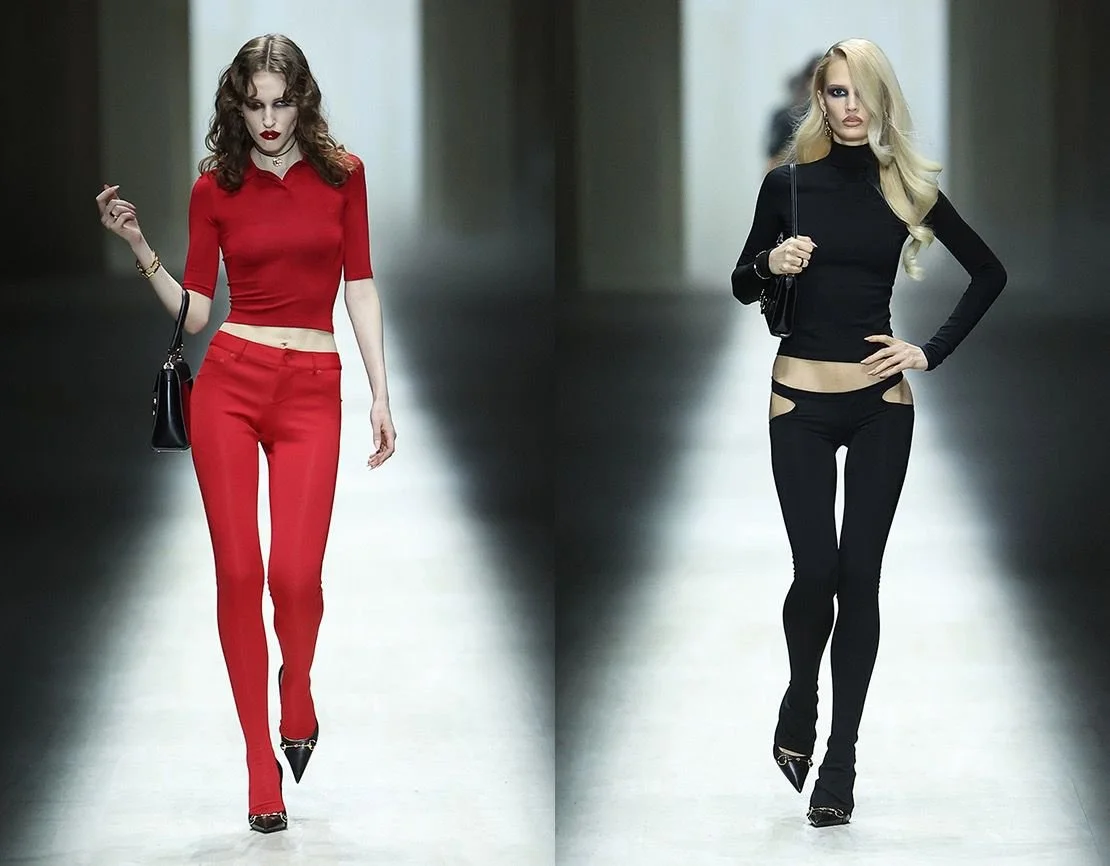
“My overall vision for Gucci is built around a sense of pragmatism,” shared Demna with Vanessa Friedman of The New York Times.
The idea of Gucci as a “house” rather than a “maison” seemed to interest Demna; a place that doesn’t latch onto nostalgic pretensions but instead rewrites itself with the influx of the everyday. This informed the first section of the collection: a cavalcade of sexed-up club queens and juice-heads in leggings and muscle-tees; bedazzled body-con dresses and t-shirts seedily worn as Roman stolas; a shoulder-slung monogram fanny-pack from within which party favours might burst, or the louche irreverence of a mini-dress that perhaps overdid it on its prefix.
“My overall vision for Gucci is built around a sense of pragmatism,” he shared with Vanessa Friedman in an interview for The New York Times, “Products that can be enjoyed by a variety of people, that enrich their lives and make them feel great, without the need for pseudo-intellectual justifications.”
Such realism is, without a doubt, a strategic move. The brand’s revenues have been almost halved, from $12 billion to $7 billion—in a decline more thoroughly detailed in my previous Substack post—over the last three years. Fortunately, while at Balenciaga, Demna’s metamodern vocabulary was often perceived as forced, at Gucci, it comes nowhere close to being verbose, articulating itself with just the right amount of dexterity.
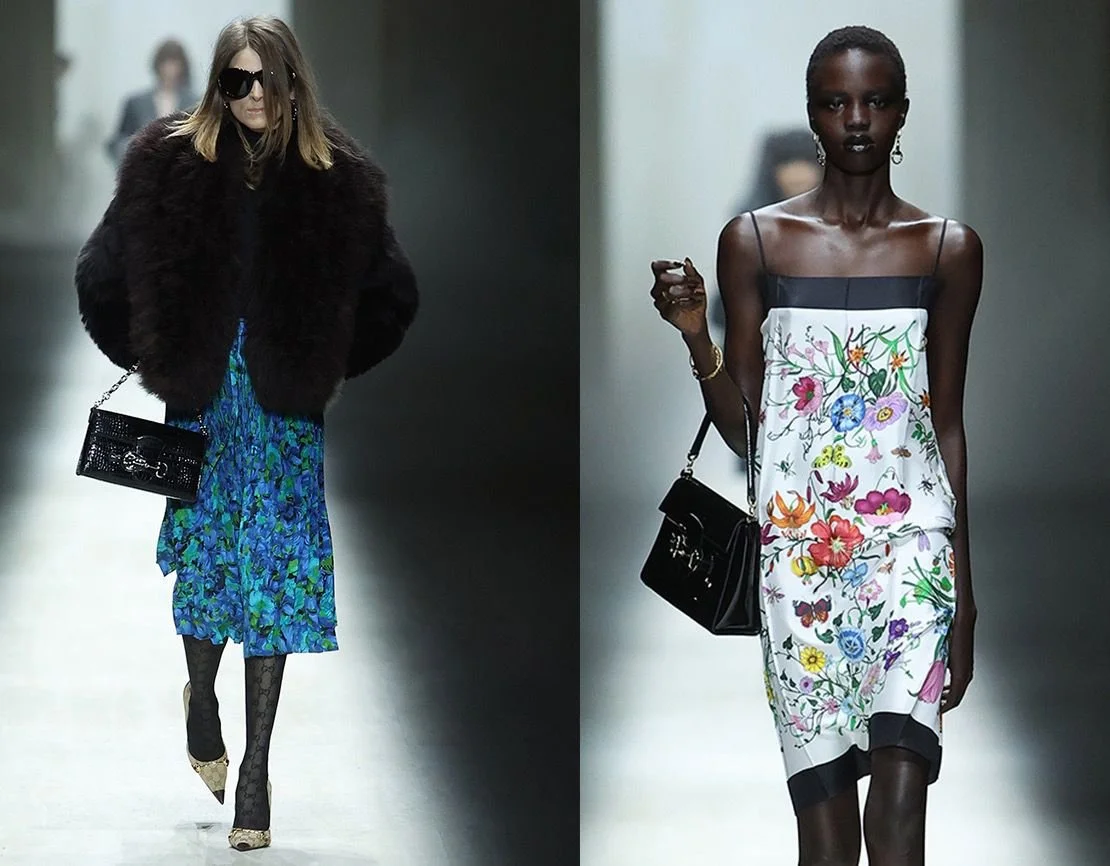
The Gucci Flora scarf, originally designed specially for Grace Kelly, was one of the few nostalgic nods in the collection.
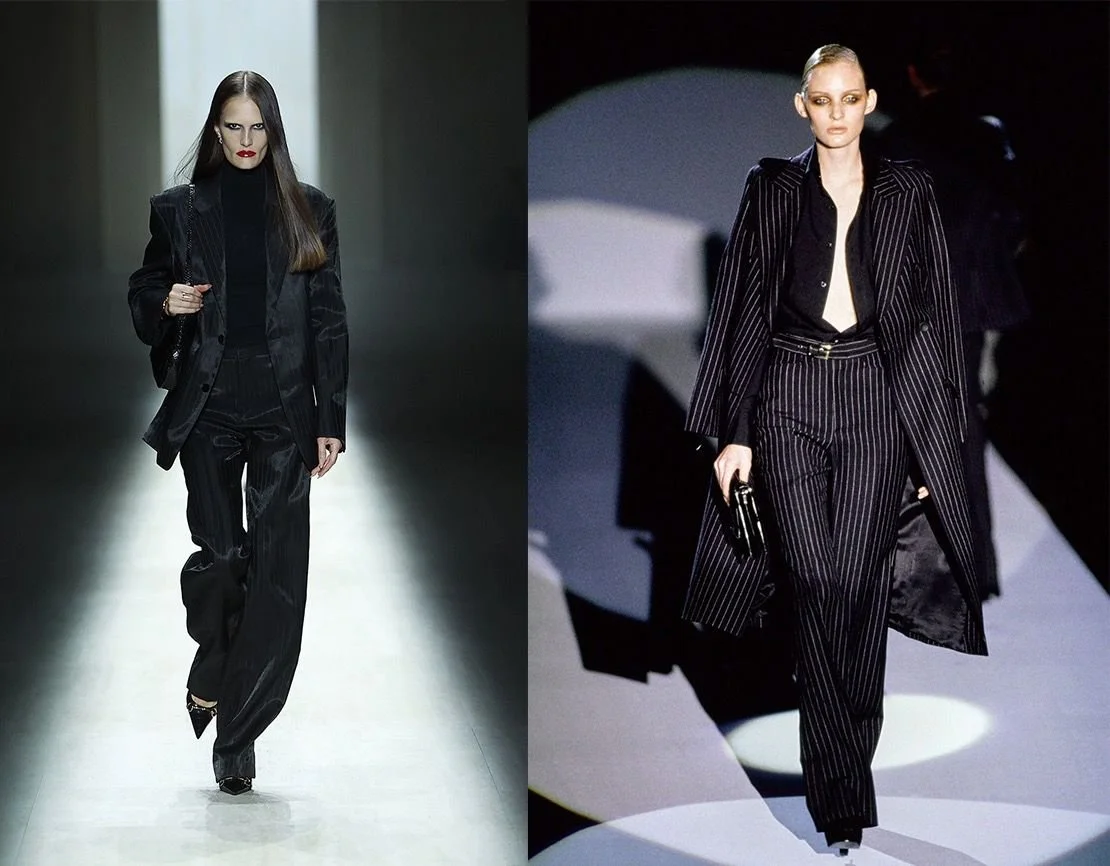
A pinstripe suit worn by Alla Kostromichova that directly called back to Look 48 from the Fall 1996 collection.
While the first part of the show relied heavily on form, the following section was all about syntax—meaning, how Demna and Gucci came together in the same sentence.
A bandeau dress with the Flora scarf as its base; a pinstripe suit worn by Alla Kostromichova that directly called back to Look 48 from the Fall 1996 collection; floral pleated skirts reminiscent of Demna’s first Balenciaga runways; insect-like sunglasses taking over half of the face, an ennui sprawled on every model’s gait.
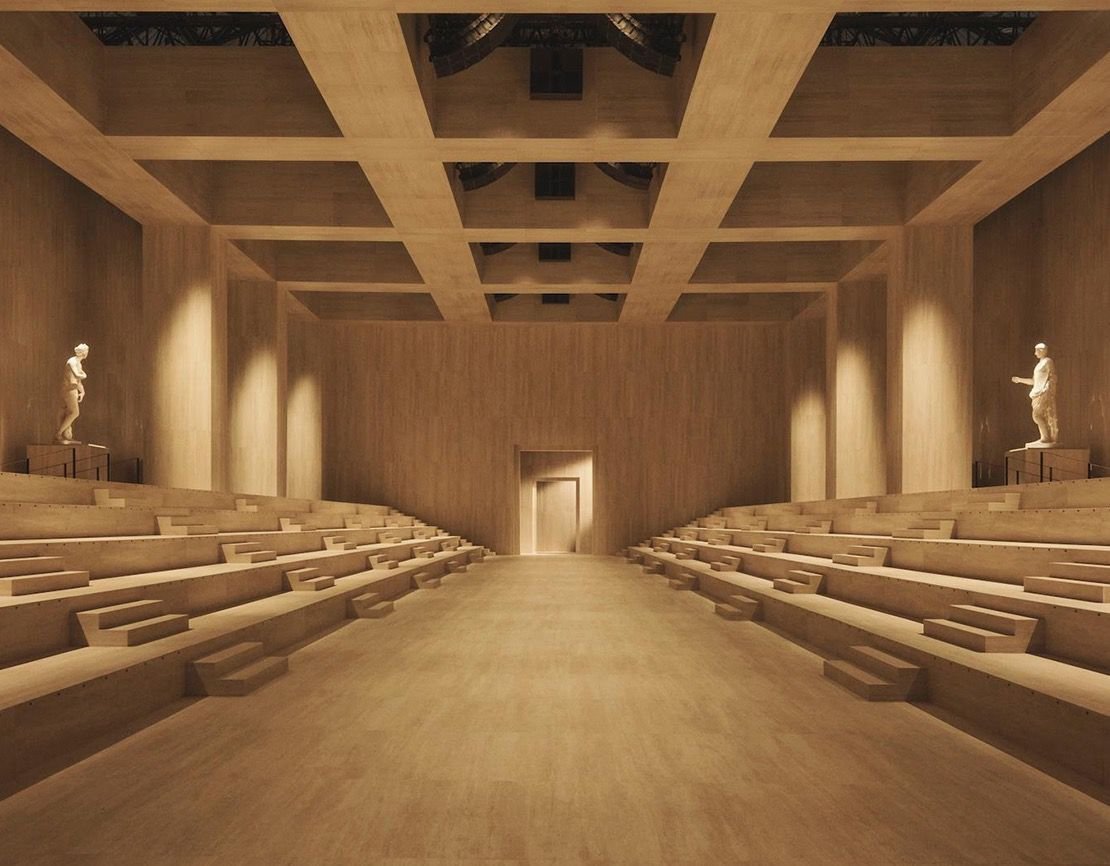
What I find most captivating is that, while the collection seems to promise the satisfaction and resolution expected of a debut, it instead investigates, rather than exemplifies, its own cliché. By refusing to provide a concise narrative, Demna builds a solid receptacle of people’s fantasies, establishing Gucci as the ultimate house of mirrors. No, it isn’t irony for the sake of irony; it’s the sui generis accepting its own status quo-ness.
“Everything you could say about a human being, you can say about Gucci,” expressed Demna in a personal letter attached to the official press release, almost as if reiterating the idea of a house that has lived many lives. What’s then left to do? Continuing to breathe life into every room.