On Swimming: from the Golden Edge of a Blue World
"During these four thousand milliseconds, I become another point in the plane wavefront. And there, estranged from myself, I am something else, I am everything, all at once."
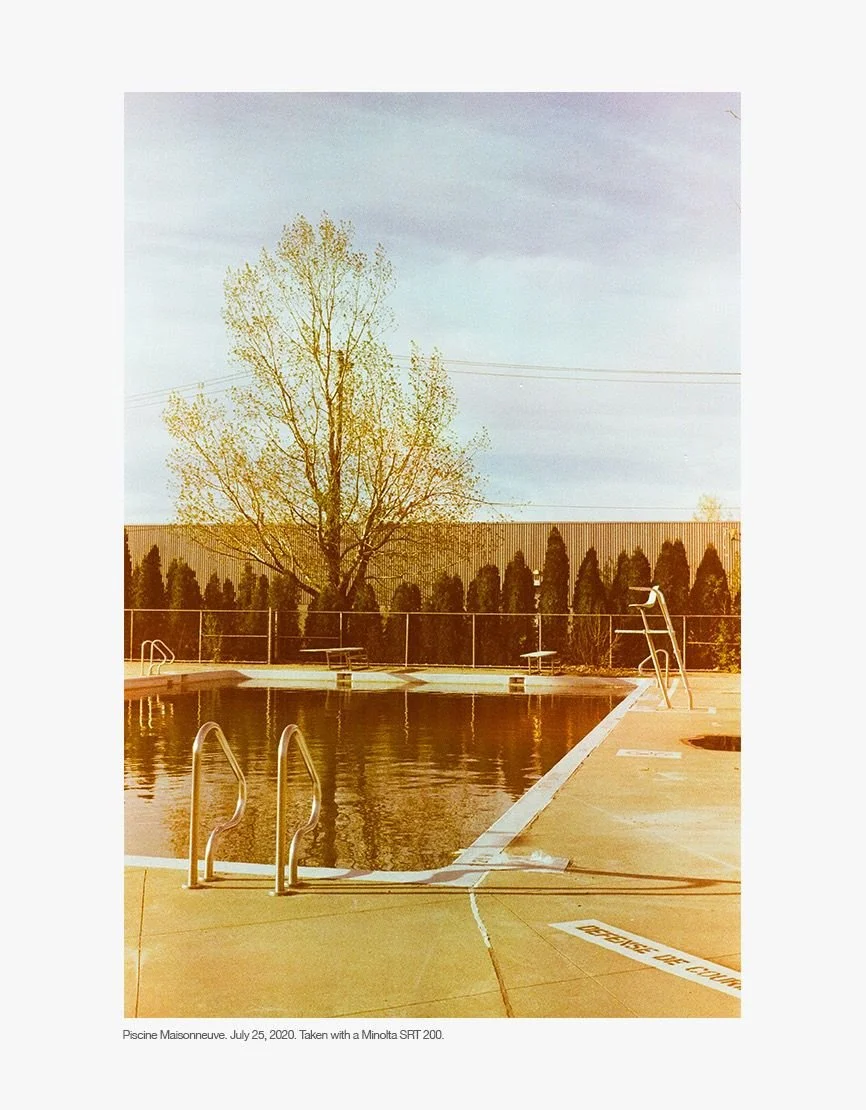
My history with swimming started with a doctor’s recommendation.
After a lifetime of contending with asthma, my mom refused to let her youngest live with the weak lungs that ailed her, so I was enrolled at the local pool the summer I turned four.
At school, I joined the swim club, and the pool quickly became my special place. With after-class practice and weekend competitions, my time and energy were consumed between studying and swimming. Despite all the efforts, I never won any medal. None at all. As cliché as it may sound, it was swimming that made it worthwhile. As a fat kid, up to the neck in water, I could be as jolly as a cherub in a religious painting. I could see myself from a different point of view; I could have a taste of self-worth.
Two years ago, around the time of the great Canadian wildfires of 2023, I had a burst of eco-anxiety, growing increasingly worried about my respiration, about pollution, about the smoke, about the forests, about the poor animals, about my bronchiols… So I started hitting the pool again.
The hardest was to detach myself from my competitive nature. If I focused too much on what the other swimmers were doing, how fast they went, how hot the guy wearing the swimming cap with the Brazilian flag was, then I was just wasting precious time better invested in my technique. If I could rewire my body to waltz instead of wrestle, I could let myself go, and my brain could then re-center in the offerings from other realms. For I, at my most Buddhist, will say that a good swim will always require the ego to submit—I know I’ve gotten myself there when, enclosed in the ultramarine tint of my goggles, inside that blue world with no name, my eyeballs clock at the upper edge of my lid, like St. Philip Neri in Guido Reni’s Ecstasy. And I transcend. Through the tire and uncoated rim of my lens, through that worn edge that colours life in divine gold, I am gone.
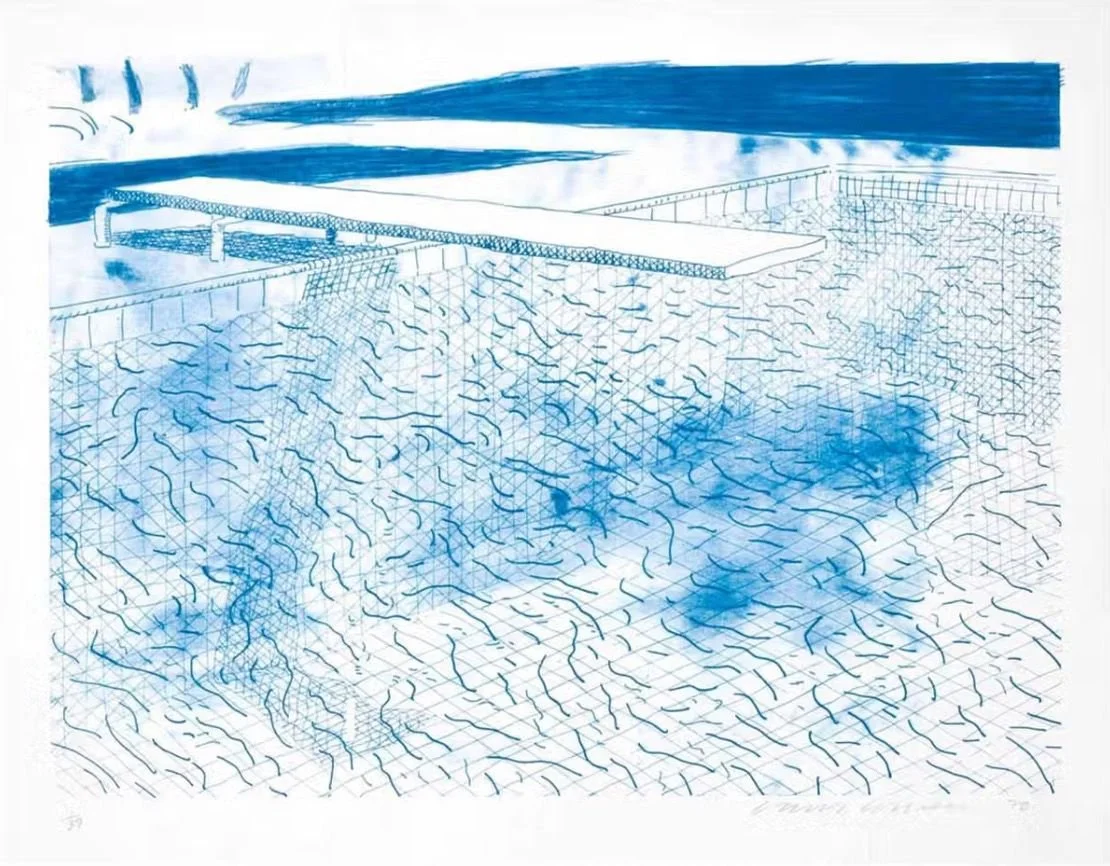
Lithographic Water Made Of Lines. David Hockney, 1980.
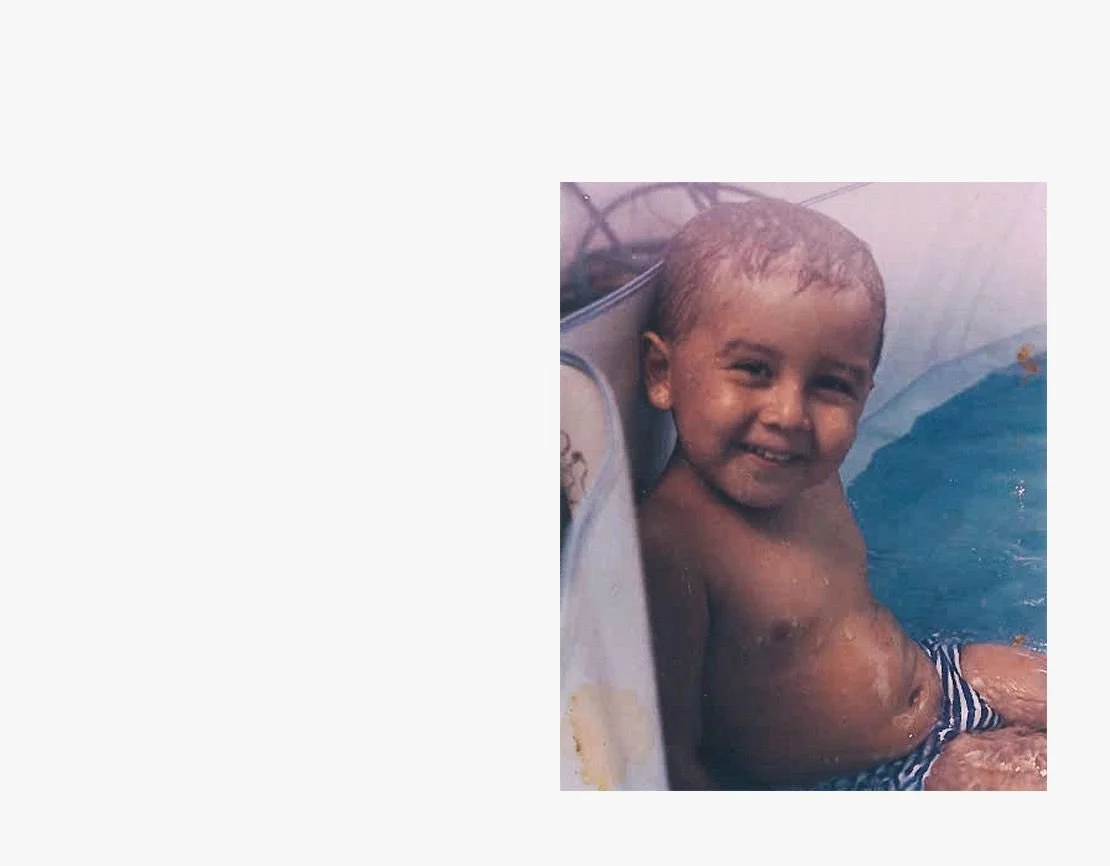
In John Cheever’s The Swimmer (1964), an upper-class middle-aged man decides to swim back home from a party, across the county, by jumping in the pools of all his wealthy neighbours. By the end of the second page, when the weather starts to go awry, we learn that the reality that Cheever’s hero—a man who goes by the tender name of Neddy Merrill—once knew now is just a sad mirage: a deadbeat who lost everything after a nasty divorce caused by his own infidelity and neglect, Merrill roams the neighborhood like a wandering soul, completely dissociated, asking for money and trying to rekindle with women he once took as lovers; he only lusts for life when swimming in the hypnotizing, chlorine waters of a pool.
Himself an avid nageur, Cheever originally conceived The Swimmer as a novel; it took him two months to narrow 150 pages down to 16. In one of his 1970 journals, he wrote: Thunderstorms, polished air; the light seems honed, buffed, and, late in the day, strikes from a low angle. I swim at around four, but the poignance of a swimming pool in September seems to have lost its legitimacy for me. The pool is real enough and the crux, the truth of a humid afternoon. There are leaves in the water these days. I am the last swimmer. The wind in the leaves is highly vocal. The light is pure and very elegiac. I enjoy swimming at this time of year. The water is in the sixties. The stones are warm and I lie naked on them. Happy, happy.
There’s a minuteness in the entry—crispness. A meditation on the now that I can recognize.
Lord Byron also entertained the idea of being a merman. In 1810, he swam across the Hellespont, a strait in northern Turkey, today known as the Dardanelles, hoping to overcome a terrible bout of writer’s block. After his 7-km crossing, he produced “Written after Swimming from Sestos to Abydos.”
Camus was another amphibious man of words. In one of his notebooks he wrote, I have to write in the same way that I have to swim, because my body demands it. “The enchantment of death” is how he came to nickname it. For him, swimming was a way of annihilating the self, of conciliating death and life in one single sentence. One of my favorite Camus quotes involves him, flummoxed, after finishing some laps: I was listening to the waves of happiness rising up in me.
Maxine Kumin, in her 1972 poem “Morning Swim” :
There was no line, no roof or floor
to tell the water from the air.
and in the rhythm of the swim
I hummed a two-four-time slow hymn.
In the first pages of Herman Melville's Moby-Dick, I always giggle when Ishmael, after describing all the depressing thoughts that’ve recently invaded his mind, he declares, Yes, as every one knows, meditation and water are wedded for ever.
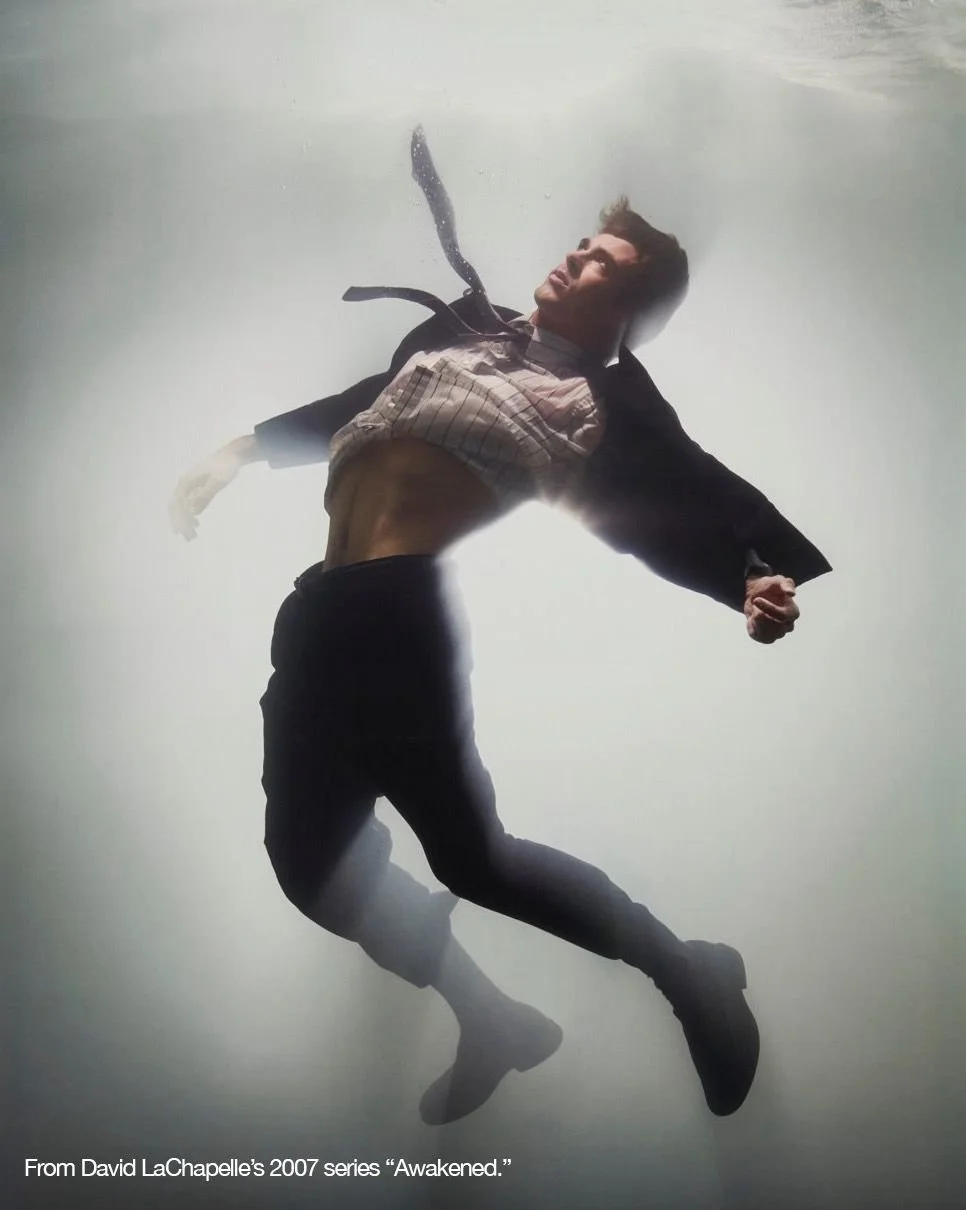
Truth is, leaving the bed is the toughest. Once I overcome this hill, I drag myself to the bathroom, I brush my teeth, and quickly slip into my Speedo. On my way to the Y, coffee in hand, I have a few drags from my joint; it helps me split my brain—one hemisphere keeps my body in aware motion, the other wanders. Fragmentation, I like to call it, to be and not to be.
Once I make it past the locker room, where men of every stock get ready to face their day, I take a moment to do some stretching. I imagine myself in an open assembly, with every part of my body as my legislature. In a friendly debate, I listen to their needs, and I let them know that I’m here for them and that, very soon, I’d be needing them too.
My mind starts to fizz. It’s the excitement (and fear) taking over.
Once in the water, breathing drills are the first thing I do.
Ready for launch, my toes push against the tiled walls.
I try to position my body in a hydrodynamic way. I push my pelvis up and press my legs together; my ass goes as close as possible to the surface. I feel like a pin-up girl, a mermaid, a pin-up mermaid. My head stays safe between my arms, my chin barely rubs my chest. I tilt my body on its axis and focus on finding the right angle for my hips. I try to picture myself as the hull of a canoe. Side to side. My strength comes projected through my arms, and onto my first stroke. My spleen contracts, as do my blood vessels. My heart rate starts to slow, and the refractive instinct of my cornea flickers. I think of Charles Tomlinson in his poem “Swimming Chenango Lake”: The act of moving in the embrace of water.
— One. Two. Three. Four…
For better buoyancy and flow, above and below the surface, I release air through my nose. I call it bracketing, but I think that’s just a word I made up. Tiny bubbles massage my forehead and the sides of my face; I have to let go of some of my reserve. To move forward, I first need to let go of what I hold onto. How much do I keep? What's essential? What’s enough? Cheever went from 150 pages to 16 in just two months.
It’s a controlled push and pull for survival. You’re constantly suffocating, technically. It’s Camus’s ‘enchantment.’ A semi-lucid trip into nothingness, leading body and mind to feel like they intertwine with the beyond. My sense of personhood finds itself heightened. Perhaps, this is what kept Neddy Merrill so eagerly addicted to the pool: the comfort that comes with equalization, of collective harmony, of feeling that, no matter the situation, you’re worthy.
— One. Two. Three. Four…
During these four thousand milliseconds, I’m an arrow; I’m a bullet; I’m a projectile of cosmic energy, a ray of light travelling through the undulating motions of unconsciousness. I become another point in the plane wavefront. And there, estranged from myself, I am something else, I am everything, all at once.
Further Readings
Camus, Albert. Carnets. Paris, Gallimard, 1965.
Cline, Emma. The Guest. Random House, May 2023.
Kunis, Maxime. Selected Poems. 1965.
Martin, Andy. “Swimming and Skiing: Two Modes of Existential Consciousness.” Routledge, April 2010.
Melville, Herman. Moby-Dick, 1851.
Tsui, Bonnie. Why We Swim. Hachette, April 2020.